Crosswords
Stand Alone, Inc.Word
4.1333.00 Reviews
- Version
- 2.8.0.6
- Installs
- 10.00K
- Age Rating
- Everyone
Screenshots
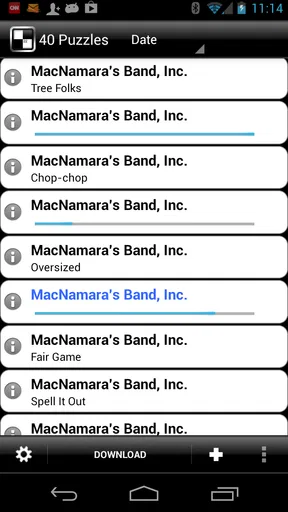
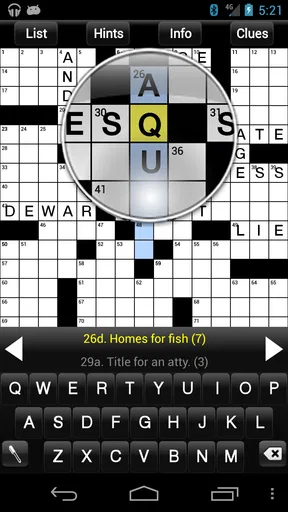
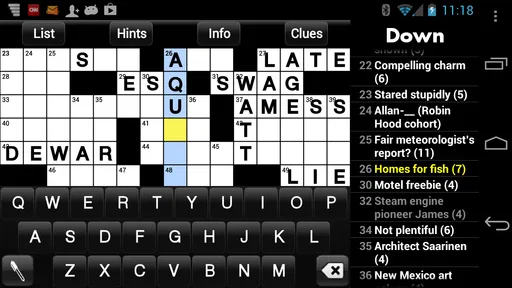
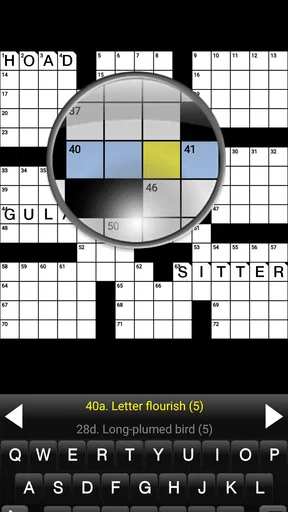
Our Review of Crosswords
 Analysis by Appyee
Crosswords is the kind of word game I return to when I want something focused rather than flashy. It puts crossword puzzles on a phone and keeps the central activity clear: read a clue, think through possible answers, and gradually make the grid work. After spending time with it, my main impression is that it succeeds because it treats crosswords as a quiet, deliberate pastime instead of trying to turn them into a noisy collection of unrelated distractions.
That simplicity is also the reason I would not recommend it to everyone. If you want a constantly changing word-game service, social competition, or a free app that feels generous from the first minute, this is a harder sell. If you already enjoy solving crosswords and want a dedicated version from Stand Alone, Inc., the experience is much easier to appreciate. It is a paid word game with a $9.99 price, an Everyone age rating, and optional in-app purchases ranging from $0.99 to $9.99 per item, so the value depends heavily on how often you will actually use it.
How the crossword experience feels in everyday use
My favorite way to use Crosswords is in short, contained sessions. I might open it while having coffee, solve a few clues, close it, and return later when I have enough attention for the next section. That rhythm suits the format well. A crossword does not require the quick reflexes of an arcade game, and it does not demand the long uninterrupted commitment of a story-driven game. The phone becomes a convenient place to keep a puzzle ready whenever I have a calm moment.
The basic loop remains satisfying because each answer changes the usefulness of the surrounding clues. A clue that seems impossible on its own can become obvious once a few crossing letters are in place. I found that this creates a good balance between knowledge and deduction. You are not simply testing vocabulary; you are managing uncertainty, making provisional guesses, and deciding when to leave a stubborn square alone.
That last decision is more important than it sounds. New solvers often waste time forcing an answer because they feel they should finish every clue in order. I get better results by marking the uncertain parts mentally, moving to clues with clearer answers, and using the resulting letters to revisit the difficult area. This is one of the most useful habits for the game: progress comes from moving around the grid intelligently, not from staring at one clue until inspiration arrives.
Crosswords also works well as a low-pressure alternative to the usual quick word games. Many mobile word titles are built around rounds that become faster, harder, or more competitive. Here, the appeal is slower thinking. I can pause without feeling that I have lost a streak or missed a timed opportunity. For anyone who likes language but dislikes frantic interfaces, that difference matters.
A good fit for focused breaks
I would especially recommend it for people who want a phone activity that feels mentally active without being exhausting. A short session can exercise recall and pattern recognition, while a longer one becomes a more absorbing concentration exercise. It is also suitable for a shared setting: one person can read a clue aloud, another can suggest an answer, and both can debate whether the crossing letters support it.
That shared use reveals an interesting trade-off. A crossword is personal when you solve it alone, but it can become conversational when you work through clues with someone else. The game does not need elaborate multiplayer systems to create that kind of interaction. The grid itself supplies the discussion. Still, readers looking specifically for head-to-head play should choose a different word game, because the attraction here is solving rather than competing.
Why the grid rewards a patient approach
The strongest part of the experience is the way small discoveries accumulate. One answer can unlock several nearby clues, and those answers can clarify a section that initially looked intimidating. I like that the game gives me a reason to reconsider an earlier guess instead of blindly protecting it. If the crossings do not cooperate, the answer probably needs another look.
A practical technique is to separate confidence levels. I treat a clue as solid when the wording and crossing letters agree, tentative when the answer fits only the clue, and doubtful when it depends on an unusual spelling or interpretation. This prevents one weak guess from controlling an entire corner of the puzzle. It is a simple workflow, but it makes the experience less frustrating and helps me notice where my reasoning went wrong.
Another useful habit is to read clues for their exact wording. A clue that appears to ask for a straightforward definition may depend on tense, plurality, abbreviation, or a less direct association. I try not to assume that the first familiar answer is correct. The crossing letters are not just confirmation at the end; they are part of the clue-solving process from the beginning.
What the developer’s approach gets right
Stand Alone, Inc. has kept the concept recognizable. The game is not buried under an oversized social layer or an unrelated progression system. That makes it approachable for someone who already understands crossword conventions and wants to start solving rather than learning a complicated interface.
The long availability of the game also gives it a certain established feel. It was released on February 22, 2010, and the current version is 2.8.0.6. Those details will matter to different readers in different ways. Some people prefer a mature title with a straightforward identity; others may expect a newer mobile game to receive more visible modernization. I fall somewhere in the middle: I appreciate the focused design, but I also understand why users accustomed to constantly refreshed apps may find the presentation less exciting.
Compatibility is relatively broad for older devices, with a minimum operating-system requirement of version 7.0. That can make it appealing to someone using an older phone or tablet, although current-device owners should still judge the game by its solving experience rather than by compatibility alone. A low technical barrier does not automatically make a word game enjoyable if its puzzle style does not match your taste.
The meaningful limitation: value depends on your puzzle appetite
The biggest weakness is not the crossword format itself; it is the value question. At $9.99, this is a serious purchase for a mobile word game. I can justify it when I know I will solve regularly, but a casual player who opens crossword apps only once in a while may find the cost difficult to overlook. The optional purchases, priced between $0.99 and $9.99 per item, add another layer to that decision.
I would examine the purchase screen carefully before committing to a long-term routine. The important question is not simply whether the initial price is affordable. It is whether the available puzzle content and your personal solving frequency make the total experience feel worthwhile. Someone who solves several times a week may see the game as a reusable pastime. Someone who wants to sample a few puzzles may prefer a free or lower-cost alternative first.
This is also where Crosswords differs from many modern word apps. Free competitors often rely on advertising, daily rewards, limited turns, subscriptions, or a large catalog designed to keep you returning. That model can be cheaper at the start, but it may interrupt the solving flow or encourage habitual checking. Crosswords takes the opposite route: the upfront price is easier to understand, yet the commitment is harder to justify if you are uncertain about the format.
There is a second limitation for people who need strong guidance. Crossword solving can be opaque when you are unfamiliar with the conventions. I sometimes know that an answer must fit the grid but still cannot tell what kind of clue interpretation the puzzle expects. That is part of the genre, not necessarily a defect in this particular game, but beginners should be prepared for a learning curve. If you want a word game that teaches every step, gives frequent hints, or explains each answer immediately, a more instructional alternative may be friendlier.
Who should choose it, and who should skip it?
I think Crosswords is best for an adult or older child who already likes clue-based wordplay and wants a dedicated puzzle experience on a mobile device. The Everyone rating makes it broadly accessible, but accessibility of content is not the same as ease of solving. A younger player may enjoy it if they have the vocabulary and patience for crossword clues; another may find a picture-based or anagram game more welcoming.
It is a particularly good match for:
People who prefer thoughtful, untimed word puzzles to fast rounds.
Regular crossword fans who want a portable option for quiet breaks.
Players who enjoy solving through crossings, revision, and gradual deduction.
Households that like working on clues together without needing competitive features.
I would skip it if your main goal is a free daily challenge, a large social community, or constant novelty. I would also hesitate to recommend it to someone who rarely plays word games and is only curious about crosswords. In that case, trying a less expensive entry point makes more sense. The game rewards commitment to the format; it does not necessarily persuade a reluctant beginner that crosswords are for them.
How it compares with common alternatives
Compared with anagram games, Crosswords asks for more than rearranging a known group of letters. You must interpret language, estimate the likely answer length, and use intersecting clues to test your thinking. That makes it more demanding, but also more rewarding when a difficult corner finally opens up.
Compared with daily puzzle apps, it feels less tied to a single ritual. A daily format can be motivating because everyone receives the same challenge and the routine is easy to remember. Crosswords is better suited to a personal schedule. I can solve when I want, stop when I want, and return without making the game part of a public performance.
Compared with large subscription-based puzzle collections, its narrower identity is both a strength and a weakness. I do not have to sort through many unrelated modes to reach the crossword activity. On the other hand, players who want crosswords alongside spelling games, number puzzles, trivia, and other formats may get more variety elsewhere. This title makes the most sense when the crossword itself is the reason you are installing a game.
Small habits that improve the experience
I recommend starting with the clues that feel most concrete rather than following the grid from the top-left corner. Names, common expressions, simple definitions, and obvious grammatical forms can provide the first useful crossings. Once those letters are established, return to the clues that initially seemed vague.
When an answer almost fits, I avoid changing several nearby entries at once. I revise the least certain answer first, then check whether the surrounding clues become more coherent. This keeps the solving process understandable. If I erase everything in a rush, I lose track of which assumption caused the problem.
I also treat the game as a vocabulary notebook rather than only a score-based challenge. When I encounter a word or reference I did not know, I remember the crossing pattern and the clue style that led to it. That makes later puzzles feel less intimidating. The benefit is subtle: the more carefully I examine why an answer works, the more useful each session becomes beyond simply filling squares.
For a realistic everyday scenario, imagine a commute or waiting-room break with fifteen quiet minutes available. A fast action game may be awkward because interruptions matter, while a long narrative game may not be worth starting. A crossword lets you make progress in small pieces. You can solve the obvious clues, leave the uncertain ones for later, and close the app without losing the value of the session. That is where this game feels most natural to me.
What the numbers suggest about its audience
Crosswords has a 4.1 average from around 862 ratings, with roughly 333 written reviews and over 10K installs. I read that as evidence of a real but specialized audience rather than a mass-market phenomenon. It is established enough that the concept has found its players, yet not so universal that I would assume every word-game fan will enjoy it.
The rating also fits my own balanced view. The core idea is dependable, and the dedicated crossword format has genuine appeal. At the same time, the paid structure and the expectations that come with an older, focused title can create friction. A reader should not choose it because it is popular alone; the deciding factor should be whether solving crosswords is already something they want to do repeatedly.
My final recommendation
After using it as a focused word game, I see Crosswords as a specialized purchase rather than an all-purpose mobile recommendation. Its best quality is its commitment to clue solving: the grid gives every answer a purpose, and patient reasoning is more important than speed or spectacle. I enjoy that calm, methodical character, especially when I have a few minutes to think without being pushed into a timed round.
The price and optional purchases mean I would not tell a curious newcomer to buy it automatically. I would recommend it to someone who already knows that crossword puzzles hold their attention. For that audience, the portable format and straightforward design can make it a satisfying companion. For everyone else, a free trial-style alternative or a broader word-game collection may be the safer choice.
My verdict is positive with a clear condition: choose it for the crossword experience, not for variety, social competition, or bargain entertainment. If that specific promise matches what you want, Stand Alone, Inc.’s game is an easy one to settle into. If it does not, the focused design that I appreciate will feel more like a limitation than a strength.
Verdict
Strengths of Crosswords
- Large variety of crossword puzzles for different skill levels.
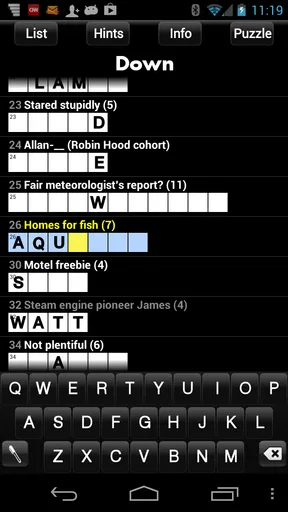
- Clean interface makes clues and grids easy to read.
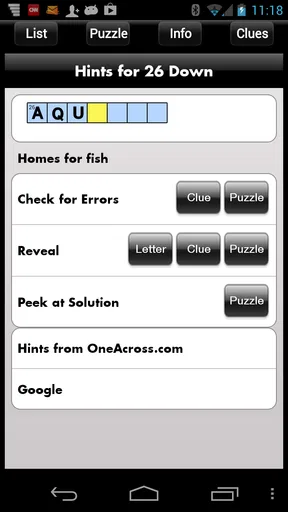
- Helpful hints can assist when you get stuck.
- Puzzles are suitable for short sessions or longer play.
- Improves vocabulary and provides relaxing mental exercise.
Limitations of Crosswords
- Some puzzles or features may require in-app purchases.
- Hints can reduce the challenge and may be limited.
- Difficulty may feel inconsistent between individual puzzles.
- Requires regular updates or downloads for new content.
- Small grid elements may be difficult to use on compact screens.
Similar Picks in This Category
View All
Word Search - Word Puzzle Game
Bluetile4.8

Word Search Quest - Puzzles
Blackout Lab4.8

CodyCross: Crossword Puzzles
Fanatee, Inc.4.7

Words of Wonders: Crossword
Fugo Games4.9

Wordscapes: Word puzzle game
PeopleFun4.7

Word Search Explorer
PlaySimple Games4.9
Frequently Asked Questions
What is Crosswords, and how does the game work?
Crosswords is a word puzzle game based on the classic crossword format. You fill a grid by solving clues that run across and down, with intersecting answers helping you confirm letters. The app is generally suitable for both casual players and experienced puzzle fans, offering a relaxing way to test vocabulary, spelling, memory, and general knowledge at your own pace.
Does Crosswords require an internet connection to play?
Many crossword apps allow at least some puzzles to be played offline after they have been downloaded, although features such as daily puzzle updates, leaderboards, advertisements, synchronization, or hints may require an internet connection. Availability can vary by version and device, so it is worth opening the app once online and checking which puzzle packs or modes remain accessible without mobile data.
Is Crosswords free to download and play?
Crosswords can usually be downloaded for free, but the experience may include advertising, optional purchases, subscriptions, or locked puzzle collections. Free users may receive a selection of puzzles, while premium access can remove advertisements or unlock additional content and features. Before confirming a purchase, review the pricing, renewal terms, and in-app purchase settings shown in your app store.
Is Crosswords suitable for beginners and children?
The game can be suitable for beginners because crossword puzzles often include clues with different difficulty levels, and some versions provide hints, reveal options, or error checking. However, the vocabulary and subject matter may vary considerably between puzzle packs. Parents should also review the app’s age rating, advertising, privacy information, and any online features before allowing younger children to use it.
What features should I check before downloading Crosswords?
Before downloading Crosswords, check whether it offers the puzzle difficulty, language, grid style, and content variety you prefer. It is also useful to look for hint limits, progress saving, statistics, dark mode, offline support, accessibility options, and cross-device synchronization. Read recent store reviews as well, since advertisements, subscription requirements, update quality, and performance can differ between Android and iOS versions.
Play our best games!


